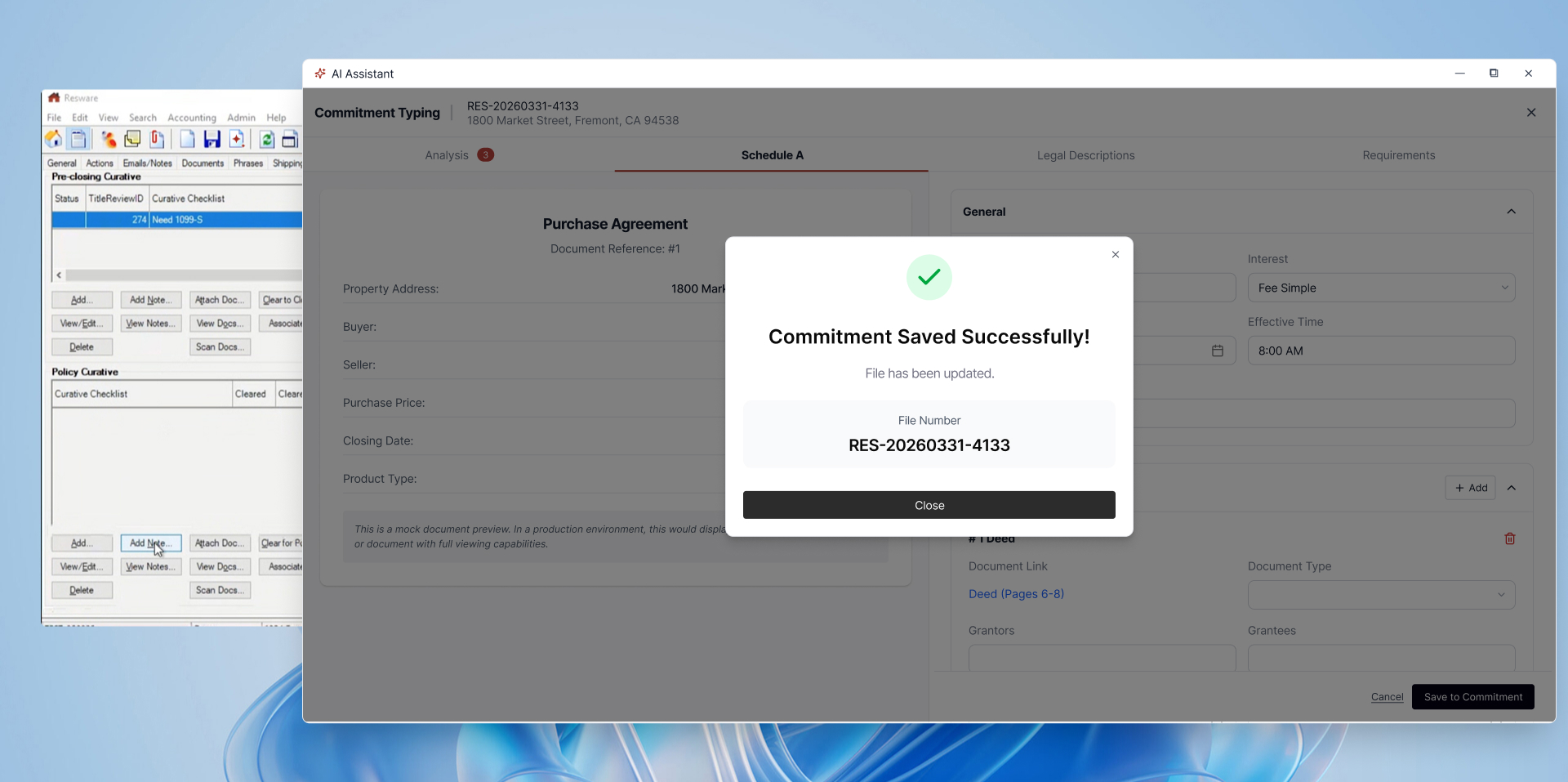
AI Assistant
Title agents were buried in manual busywork: pulling data from contracts, checking documents page by page, tracking checklists by hand. We built a brand-new web application, connected via API to our core platform, that gives them an AI assistant for all of it.
Closing document
Title agents handled a lot of manual busywork by hand: pulling order data from contracts, checking closing documents page by page, tracking checklists.
Built a new web application, connected via API to our core platform, giving agents an AI assistant that extracts data, reviews documents, and flags what needs attention.
Cut time spent creating orders and QC'ing documents by 60%, with 100% adoption: the assistant became part of agents' daily workflow.
Problem
Use case workshop
Title agents run the same closing workflow dozens of times a week, and almost none of it was automated. Before a closing could even get started, someone had to pull the sale price, address, buyer, and seller off the sale contract by hand just to create the order.
Manual data entry: sale price, address, buyer, seller pulled by hand from every contract to create an order.
Manual document review: closing packages checked page by page for missing signatures.
Manual coordination: closing checklists and party notifications tracked by hand, risking delays.
Research
This started with alignment on both sides: our PM on why automating this workflow mattered to the business, engineering on what the legacy platform could actually support. The first real decision wasn't about the AI at all. It was about where this thing should even live. The legacy platform could technically handle this today, but it wasn't built to scale with where this needed to go, and bolting AI features onto it risked destabilizing a system title companies depend on every day. We decided to build a brand-new web application instead, connected back to the core platform over an API, so data could flow both ways without touching what already worked. As more customers came online, managing each one's connection and feature access needed its own control surface, which is what became the Admin Tool.
A new web app, not a bolt-on
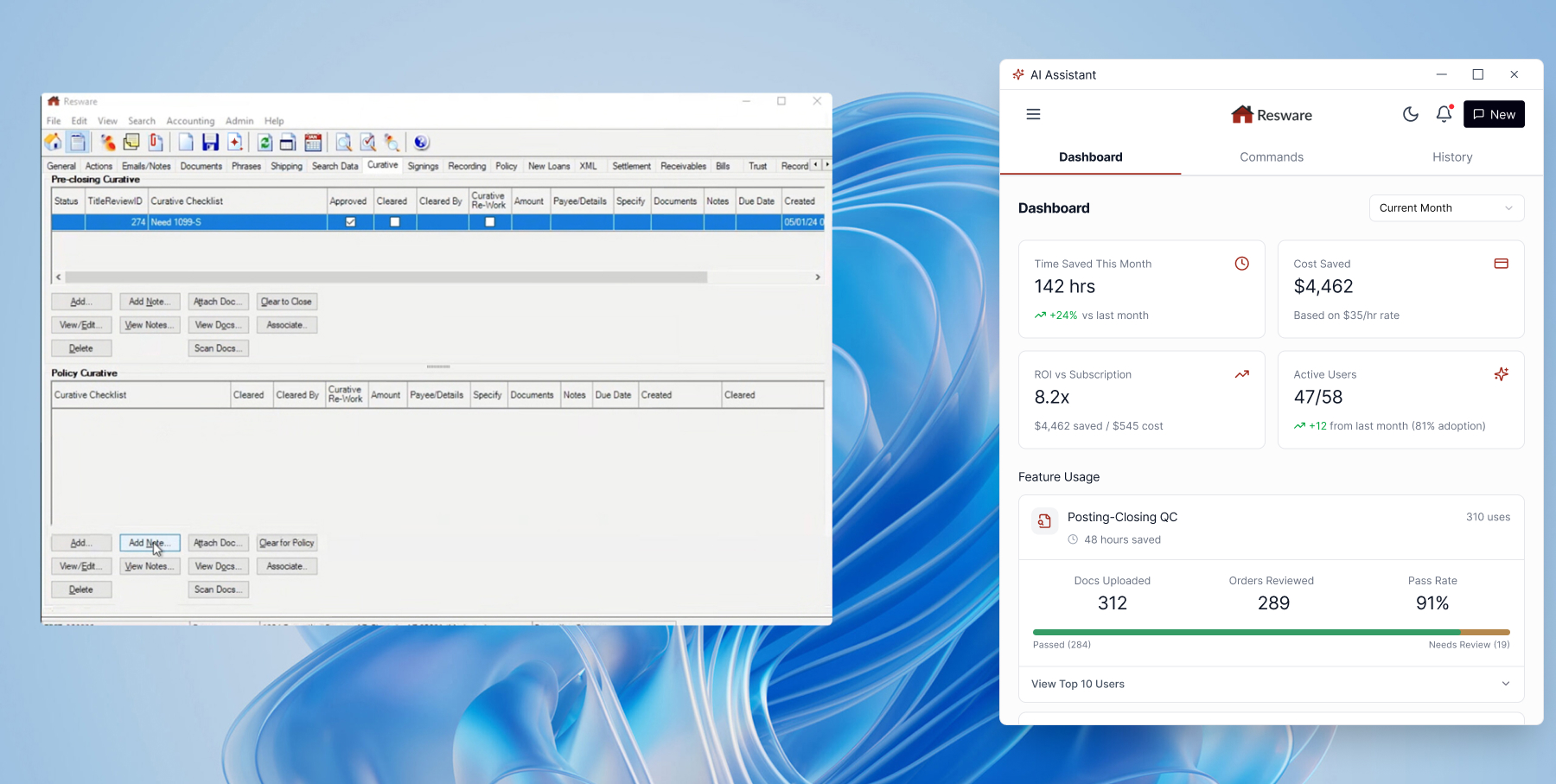
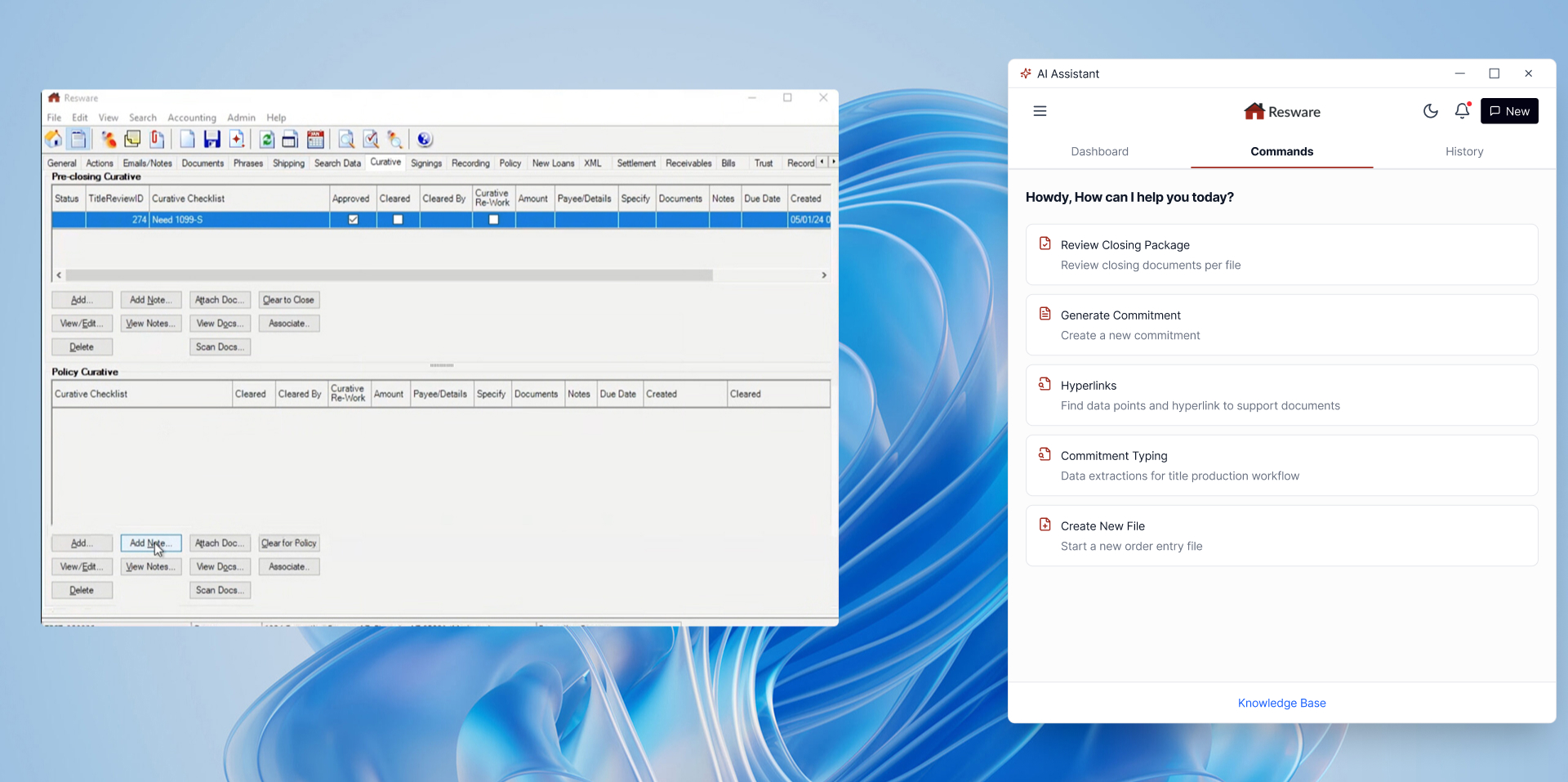
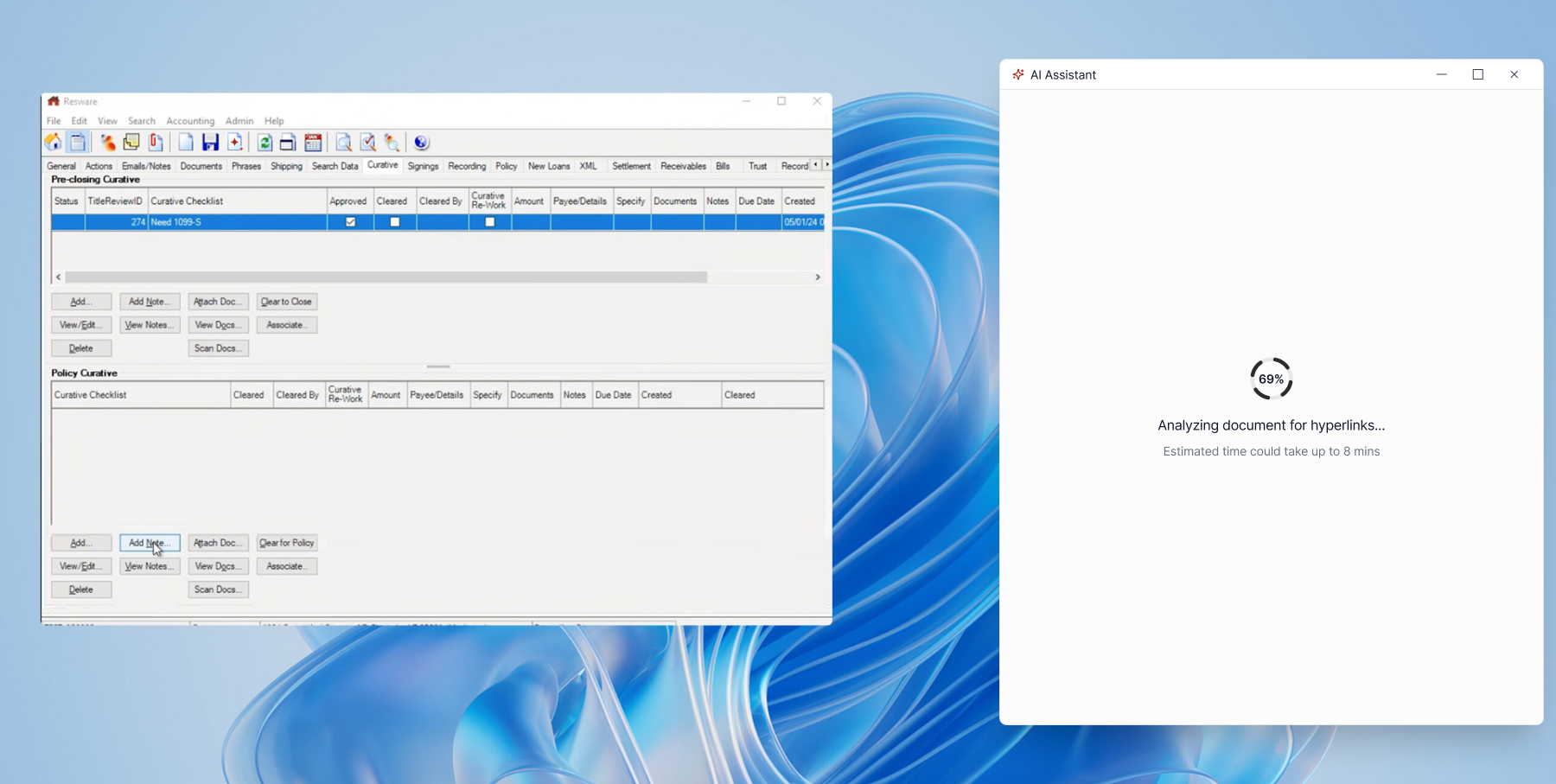
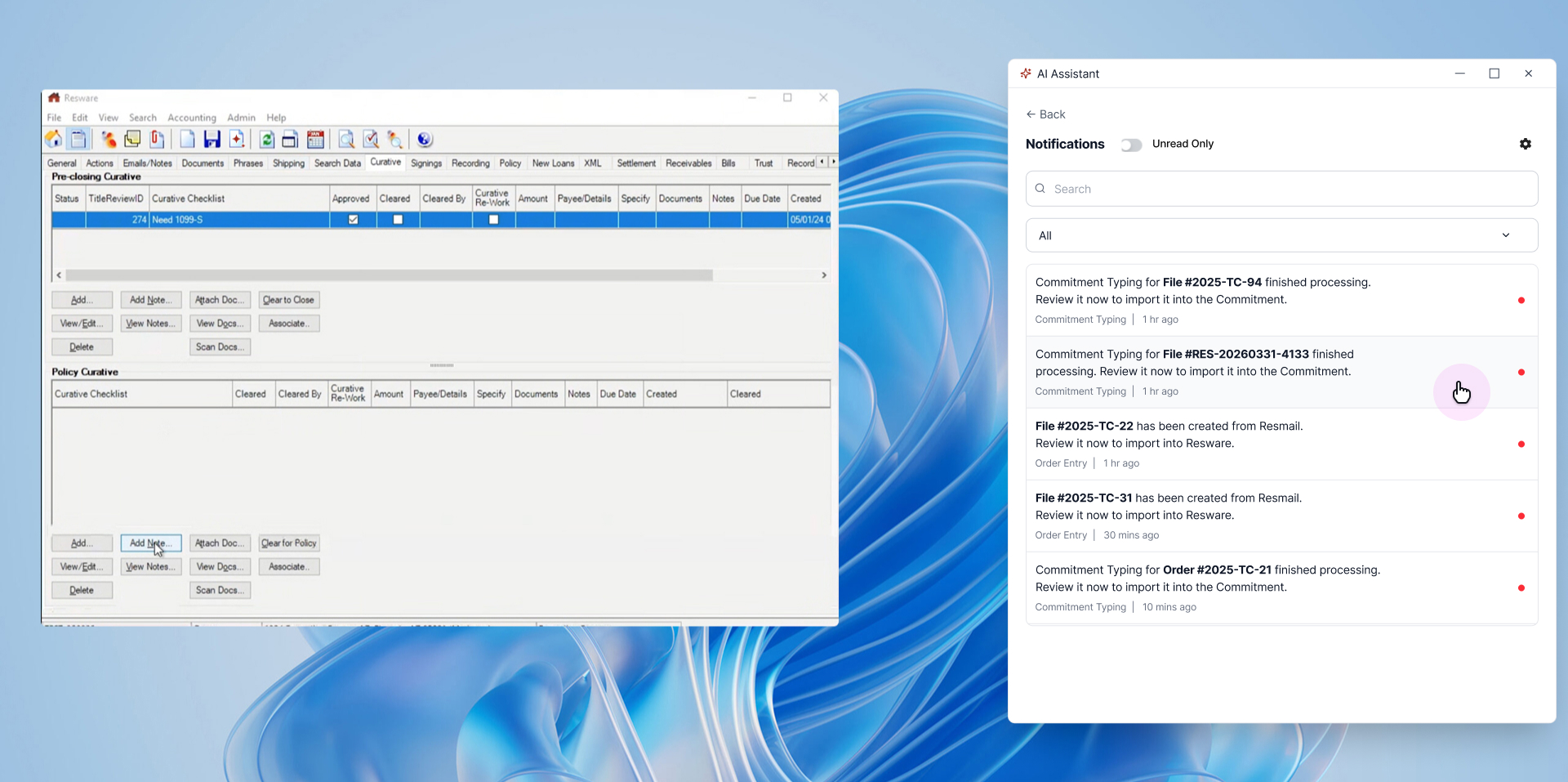
The legacy platform could support this today, but it wasn't built to scale with it. We built a standalone, mobile-first, fully responsive web application connected via API instead, designed to run side by side with the legacy platform, similar to how Clippy once worked alongside Microsoft Word, so an agent could verify order information without losing their place. Data flows both ways without disrupting the core system.
An assistant, not a replacement
Framed the AI as an extra set of eyes that catches what an agent might miss, not a system that takes over their judgment. Like any machine-learning feature, it needed iteration and earned trust to get real adoption. It was never going to be perfect on day one.
Cover the whole workflow, not one step
Data extraction, document review, and checklist coordination each work as their own self-contained feature, almost like individual agents, bootstrapped one at a time, then combined into one complete workflow, instead of three disconnected tools.
Design
Confidence & controls
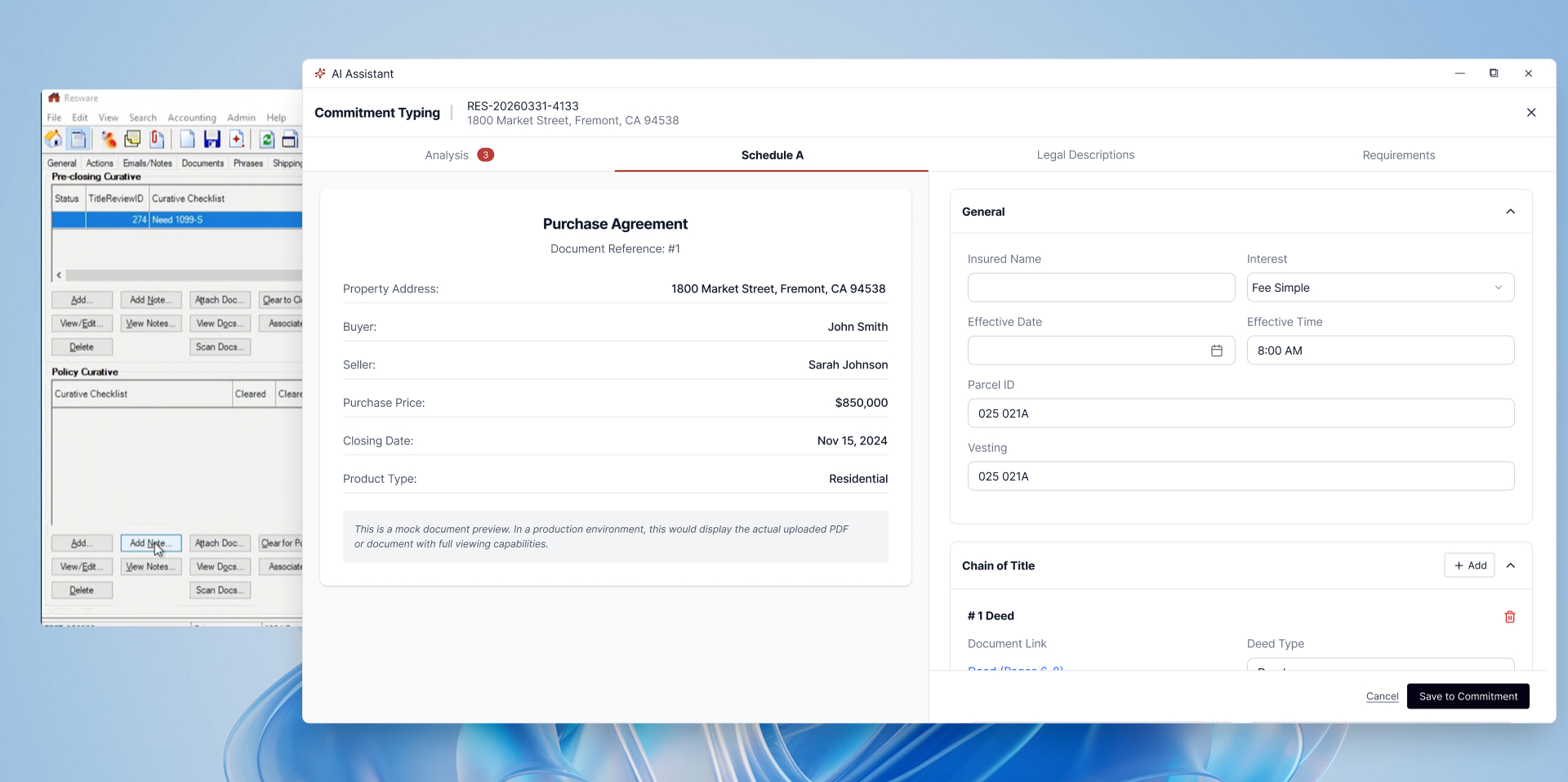
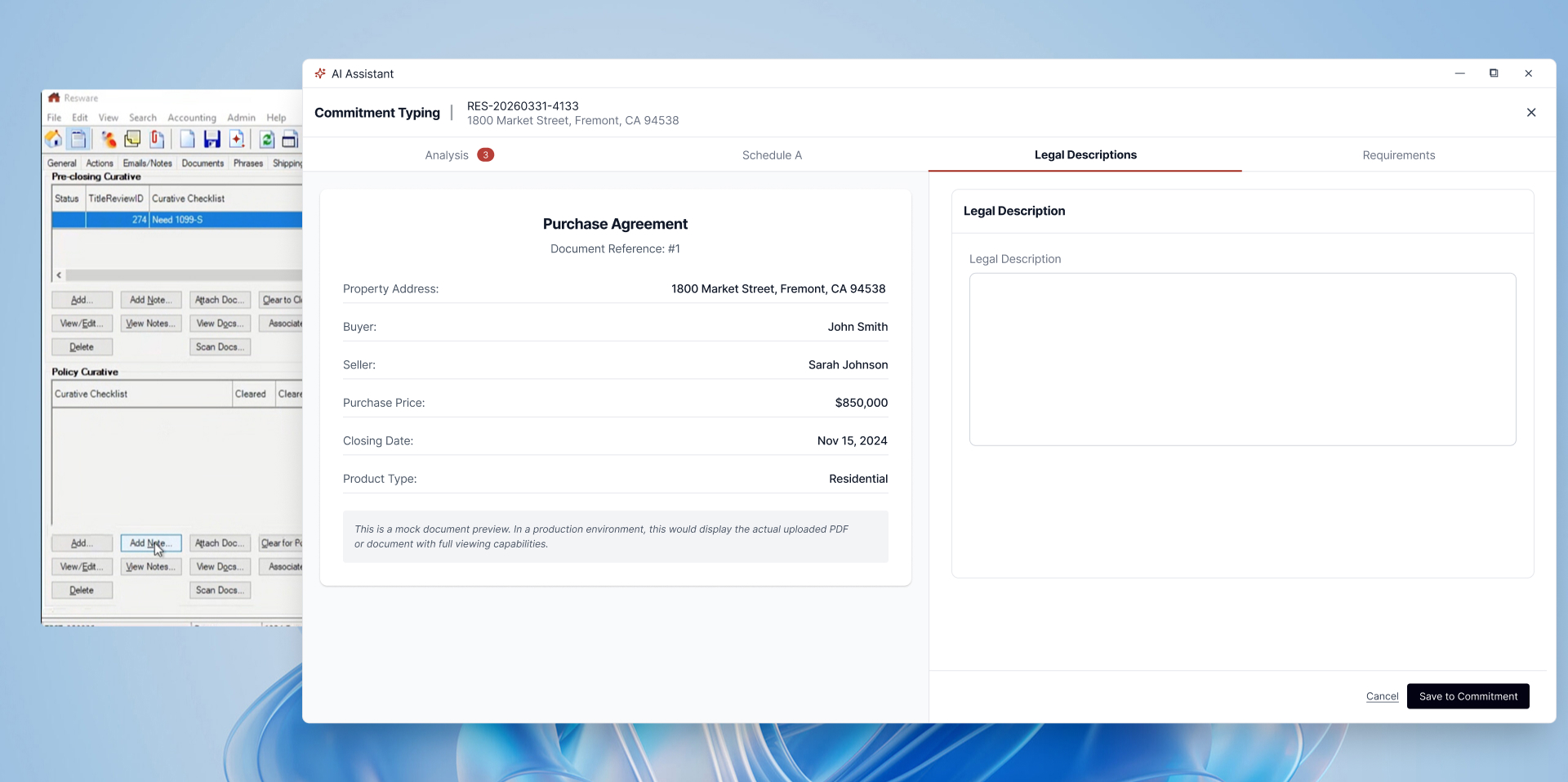
The assistant does three things end to end. It reads a sale contract and extracts the order data (sale price, address, buyer, seller) to help create the order, then pushes that data back to the core platform over the API, so nothing needs re-entering by hand.
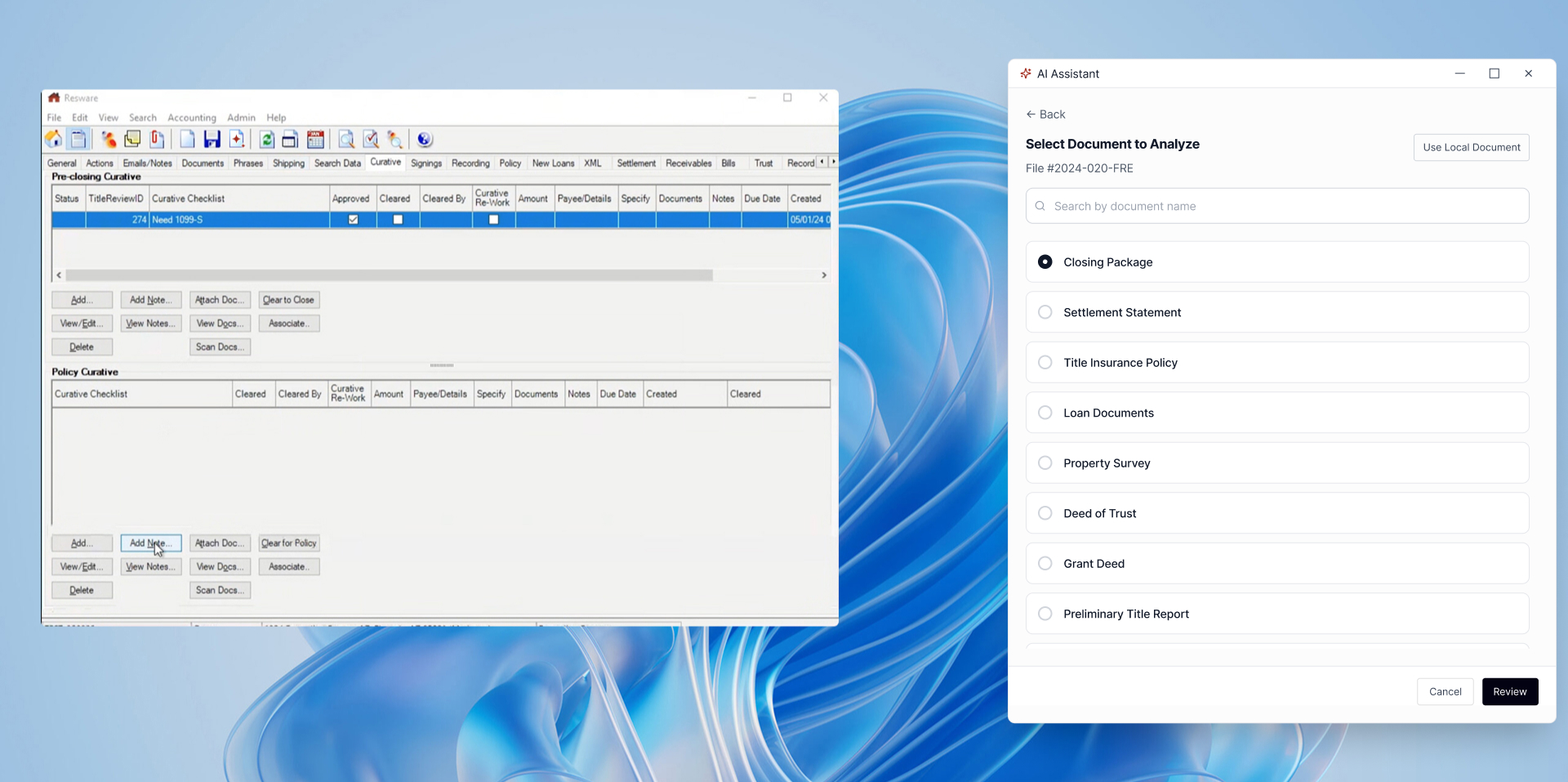
It reviews closing packages for missing signatures or data before they become a last-minute scramble (we call this piece Post Closing QC), and it checks the closing checklist and notifies the right parties automatically, so an overlooked step doesn't quietly delay a closing.
Shipping this on a two-week release cadence meant staying tightly synced with engineering on what was realistically possible each cycle, and not just on the new app's side. Some of the legacy platform's code was old and never built to scale, so establishing a reliable connection sometimes meant fixing compatibility on the legacy side first, before a feature could ship at all. The design and the integration had to move together, not one ahead of the other.
Outcome
Once live, the assistant cut time spent creating orders and QC'ing documents by 60%, extracting data and flagging issues faster than doing it by hand. Adoption was 100%: agents didn't just try it, they built it into their daily workflow, and the user base has kept growing since.
What we learned
Shipping every two weeks was aggressive, but it worked because of what was underneath it. Claude Code made quick prototyping fast, and a strong Design System foundation meant every new screen didn't have to be built and validated from scratch. I also used Claude Code to build the actual front-end components myself and commit them to GitHub, so engineers picked up real, working UI instead of a static Figma handoff. That combination let us get real feedback quickly and iterate immediately instead of waiting on a big release.
The other lesson was about scope. Rather than shipping the full vision at once, we broke each feature into the smallest chunk that could ship and prove itself: get an MVP out, then keep scaling and pulling in more data points from there. Small releases, validated quickly, added up faster than one large release would have.
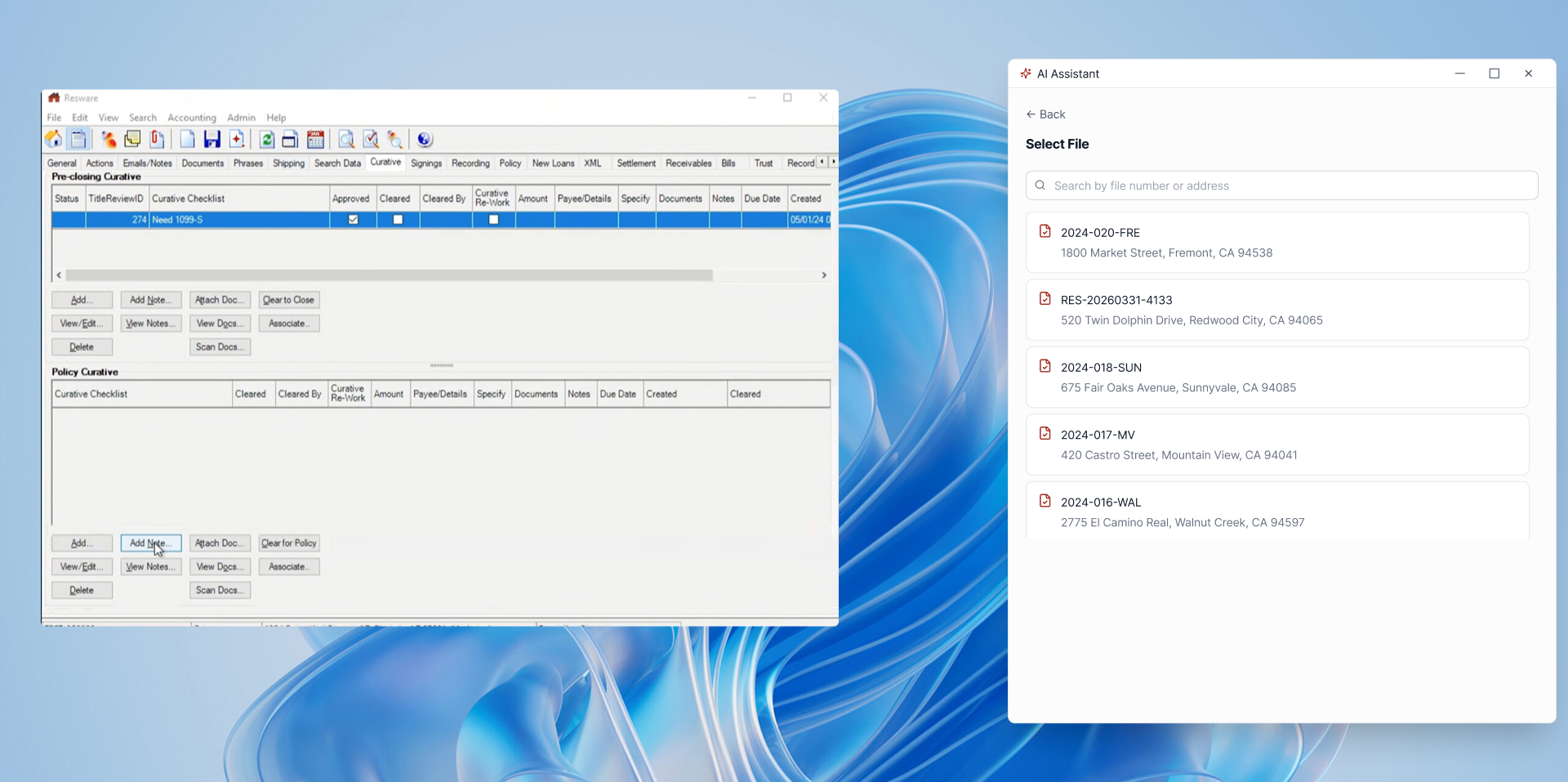
And this is still just the surface of incorporating AI into how our users work. Today, an agent still needs to be pointed at a file and a document before it acts. Where this goes next is autonomous: an AI agent that watches orders on its own and flags what needs attention, instead of waiting to be asked.
A glimpse of the AI Assistant in action, from a company's usage dashboard to identifying and extracting document data automatically, work that used to mean combing through it by hand.